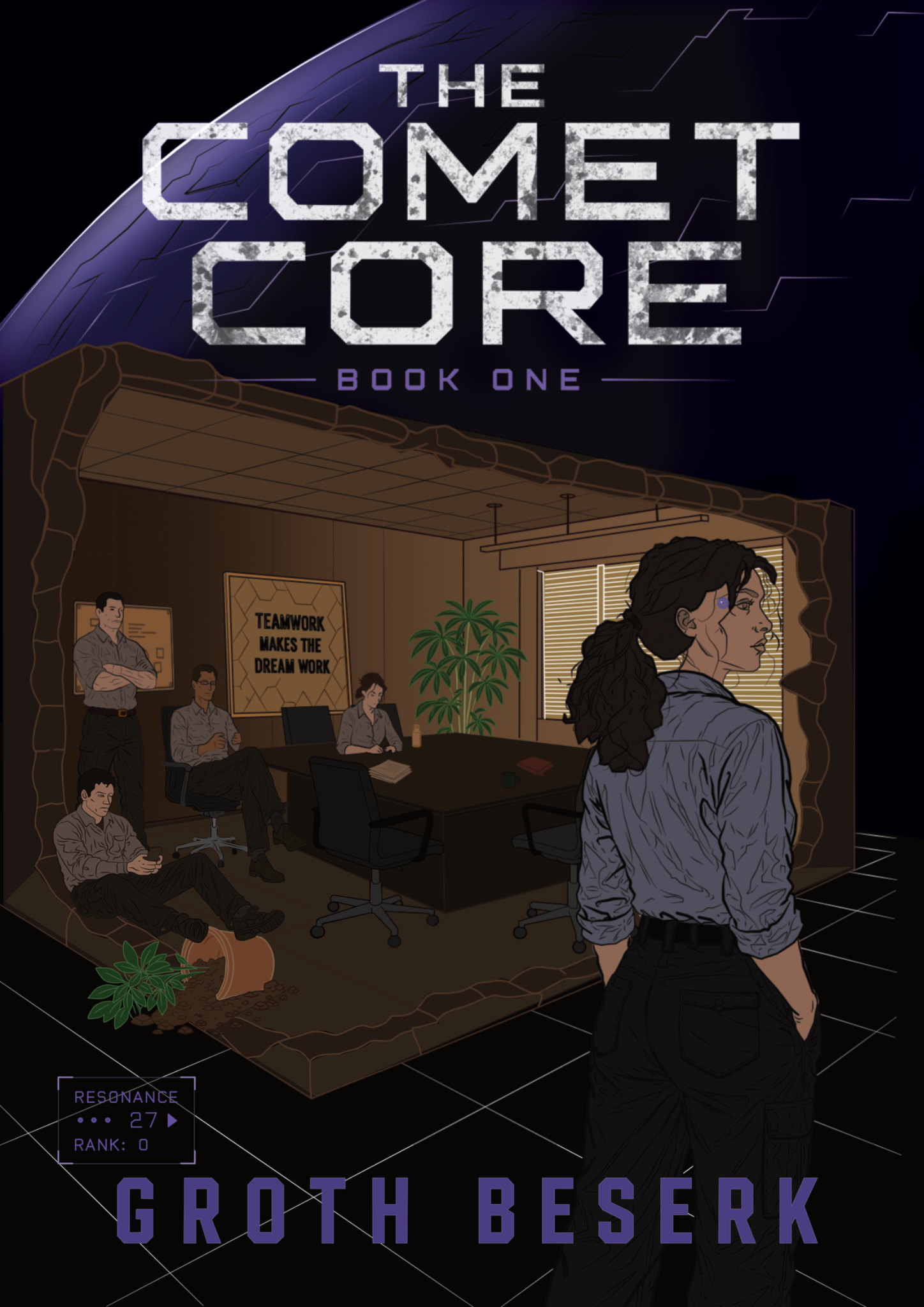
Starting from the author’s concept.
The client’s initial image already established the core premise: an office scene inside a torn-out room, a sci-fi grid environment, a massive structure and bold industrial typography.
Book cover design case study
A sci-fi LitRPG cover developed from an author’s concept into a layered, print-ready cover system with stronger hierarchy, clearer story cues and a full paperback wrap.
The brief
The author’s starting concept already had a strong hook: five coworkers, a familiar office environment, and a vast alien megastructure above them.
The design challenge was not to reinvent the idea, but to organise it. The cover needed to preserve the absurdity and humour of the premise while making the image instantly readable for online browsing. That meant sharpening the visual hierarchy, choosing a clear focal point and making sure the sci-fi scale did not swallow the human story.
Initial direction
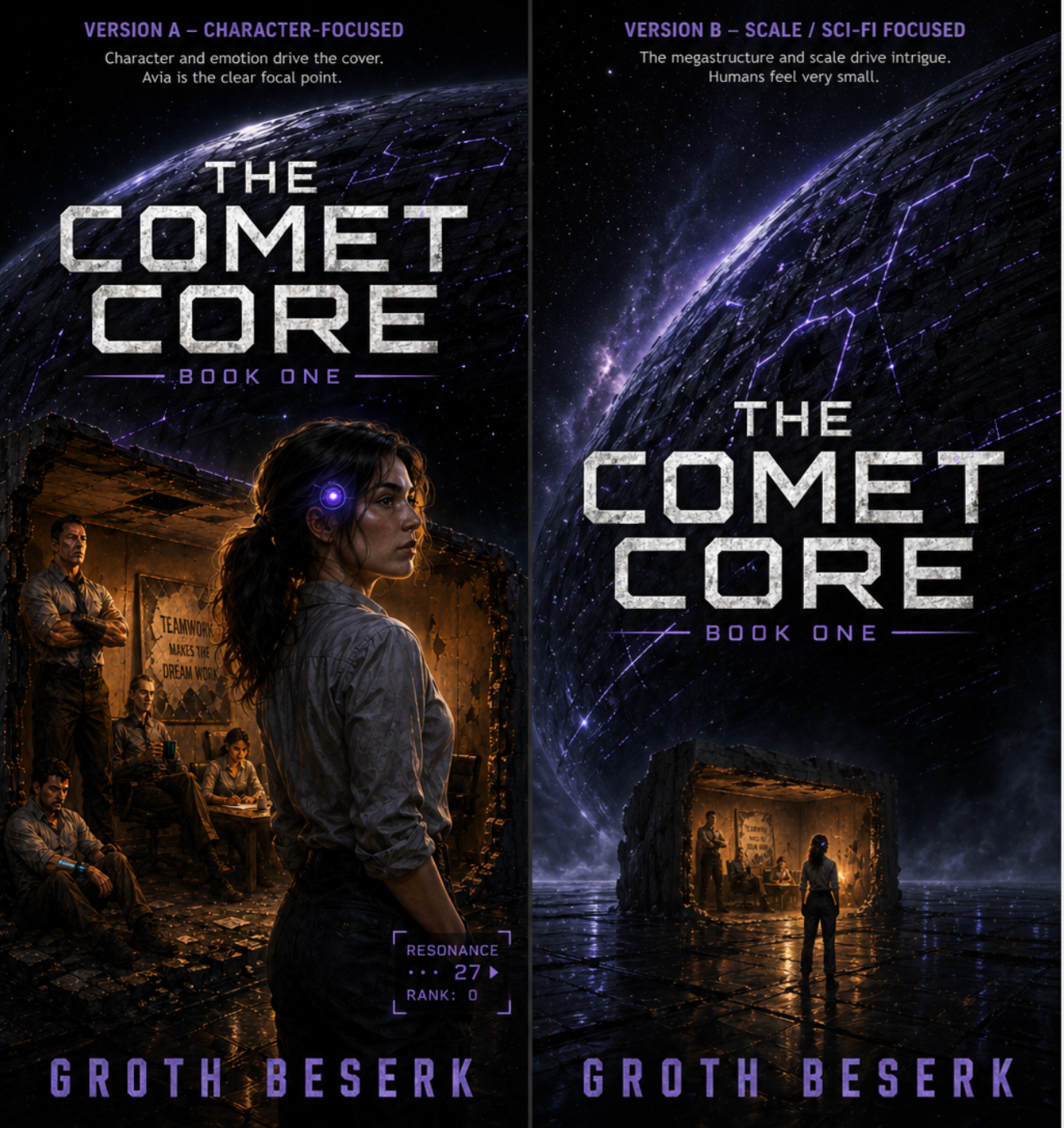
The first route brought Avia forward as the emotional anchor of the cover. This made the book easier to read at thumbnail size and gave the viewer one character to connect with immediately. The second route pushed the alien megastructure forward, creating more scale and mystery, but making the human cast feel smaller and more distant.
The author preferred the character-led version, but wanted the conference room to feel less like a tight box. That became the core refinement problem: keep Avia prominent, keep the comet/structure at the top, but make the office feel larger, more believable and more recognisably corporate.
Chosen direction
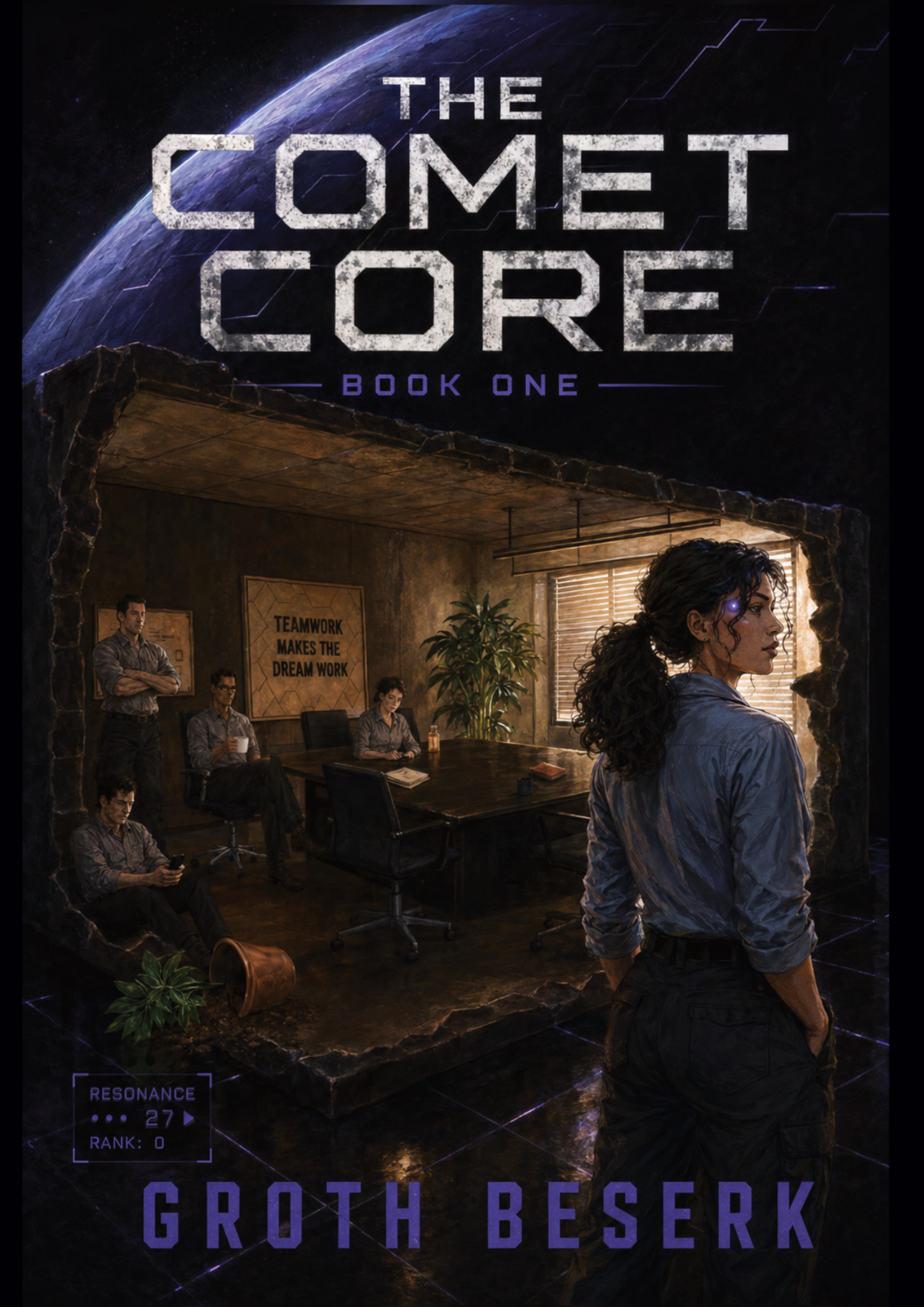
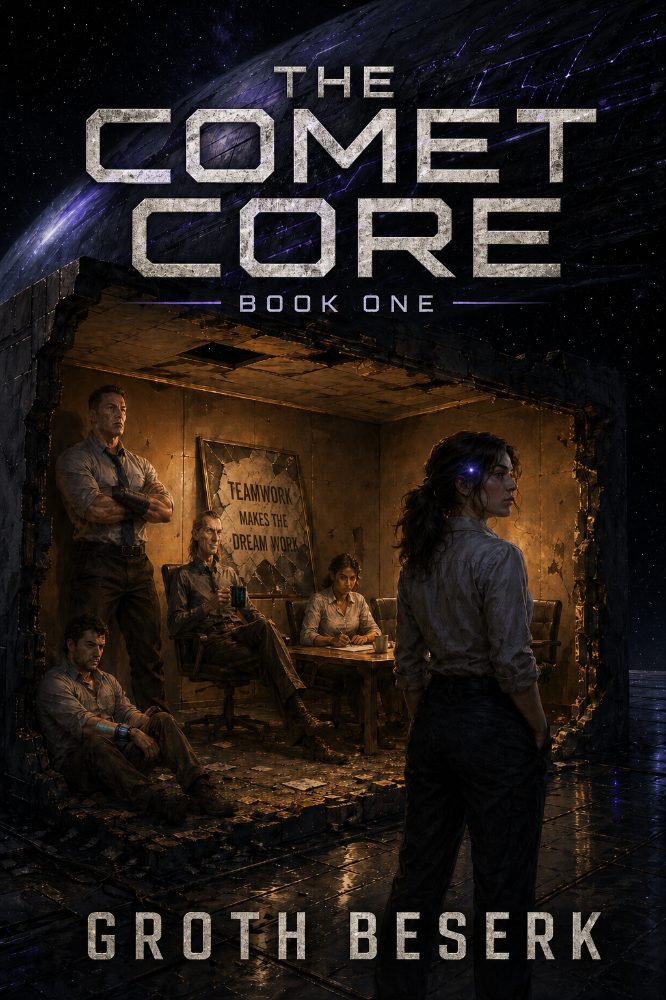
The final route keeps Avia as the main point of recognition while the room and the megastructure carry the premise. The warm office light contrasts with the cold purple sci-fi environment, which helps the cover explain the story visually before anyone reads the blurb.
Design process
The author specifically wanted source files with editable layers, so the final artwork was not built as a one-off AI image. AI was used only for quick concept testing, then the final design was rebuilt and refined in layers so individual objects, characters, type and print elements could be adjusted.

Starting from the author’s concept.
The client’s initial image already established the core premise: an office scene inside a torn-out room, a sci-fi grid environment, a massive structure and bold industrial typography.

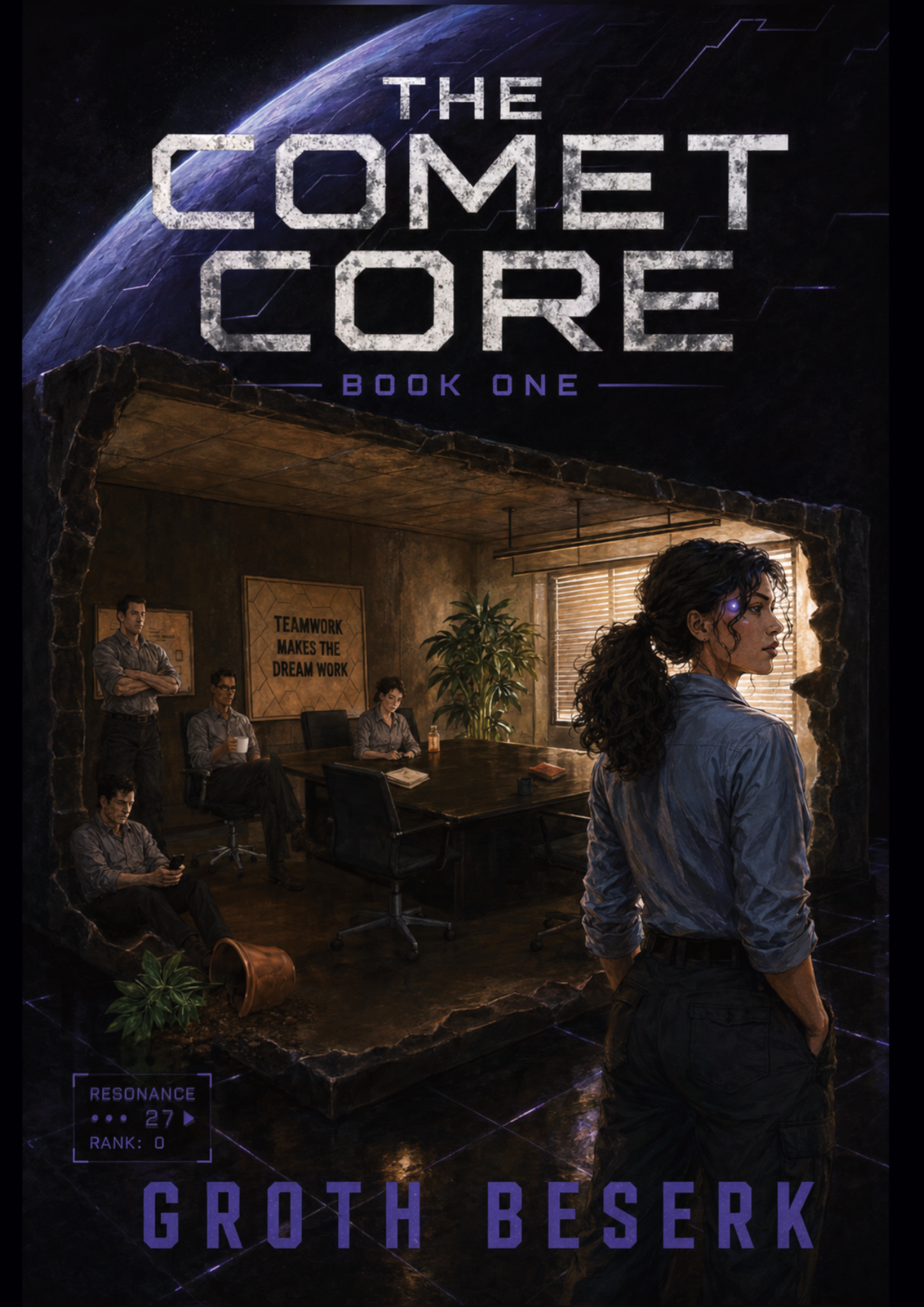
Rebuilding the room structure.
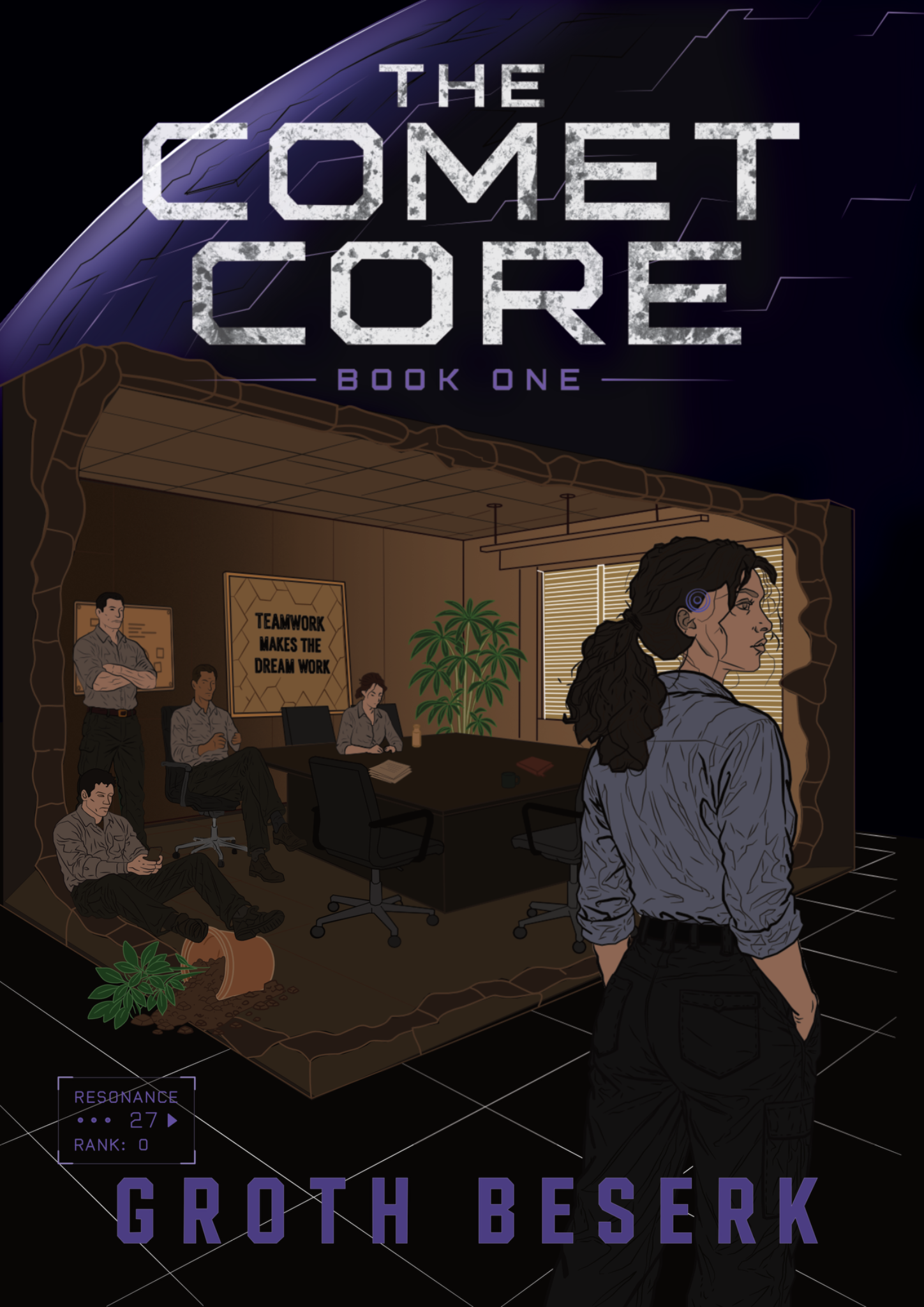
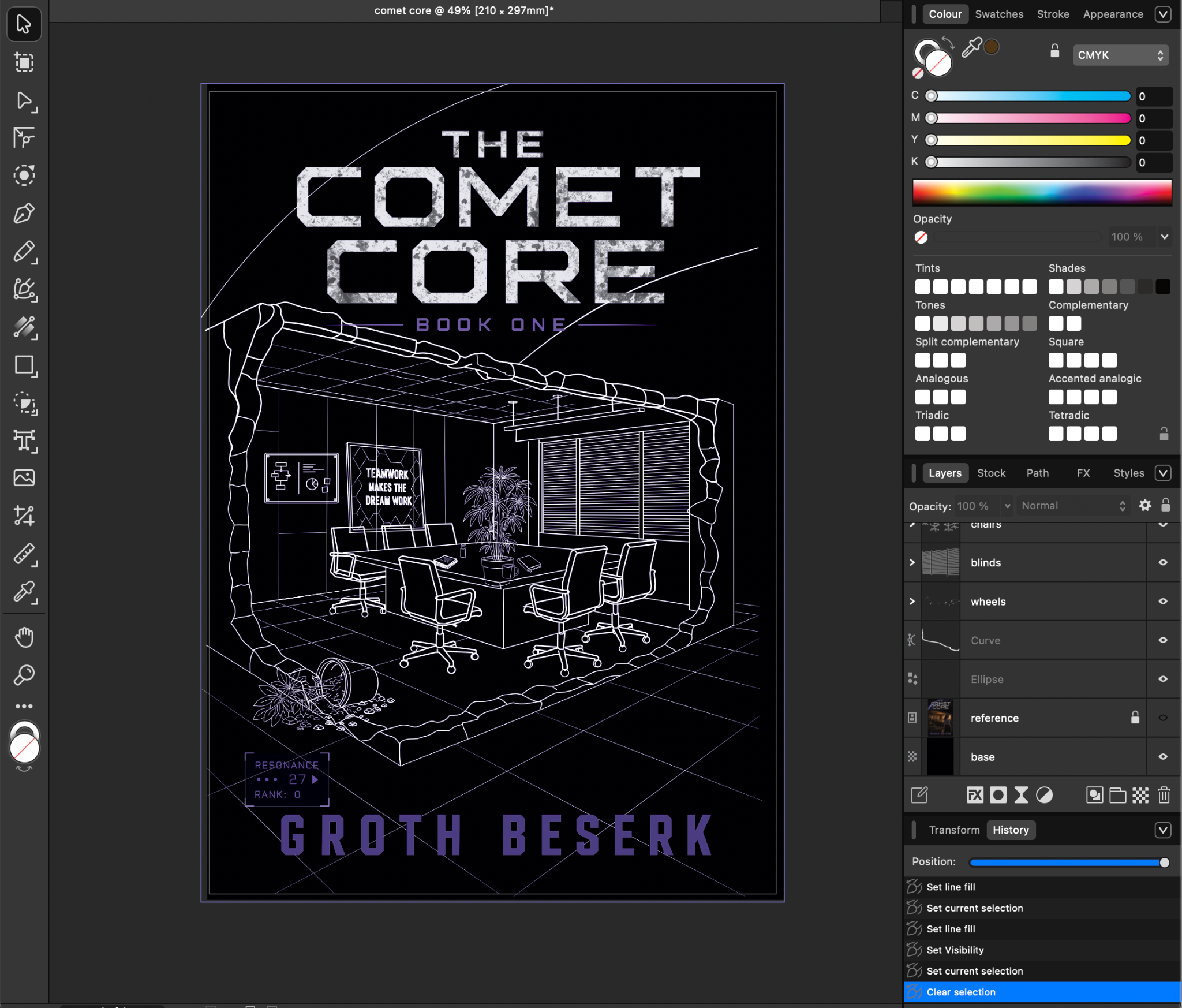
The conference room was redrawn to feel more like a real company meeting room: a longer table, additional chairs, a larger back wall, blinds, lighting, the motivational poster and the plant detail requested by the author.

Placing the team without losing Avia.
The background characters were kept smaller and less detailed so they supported the story without competing with the main figure. This preserved the author’s team-based premise while keeping the cover readable.

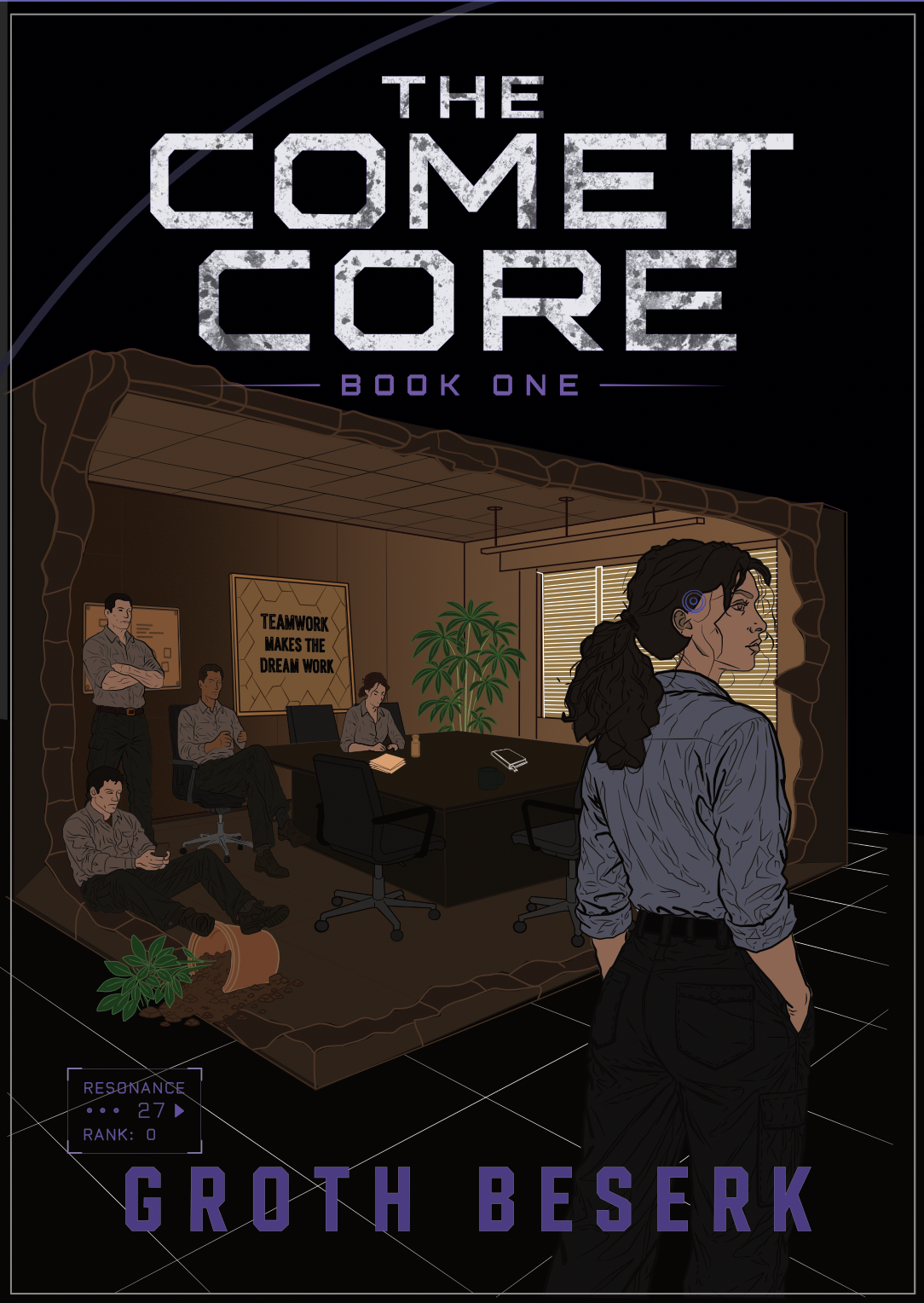
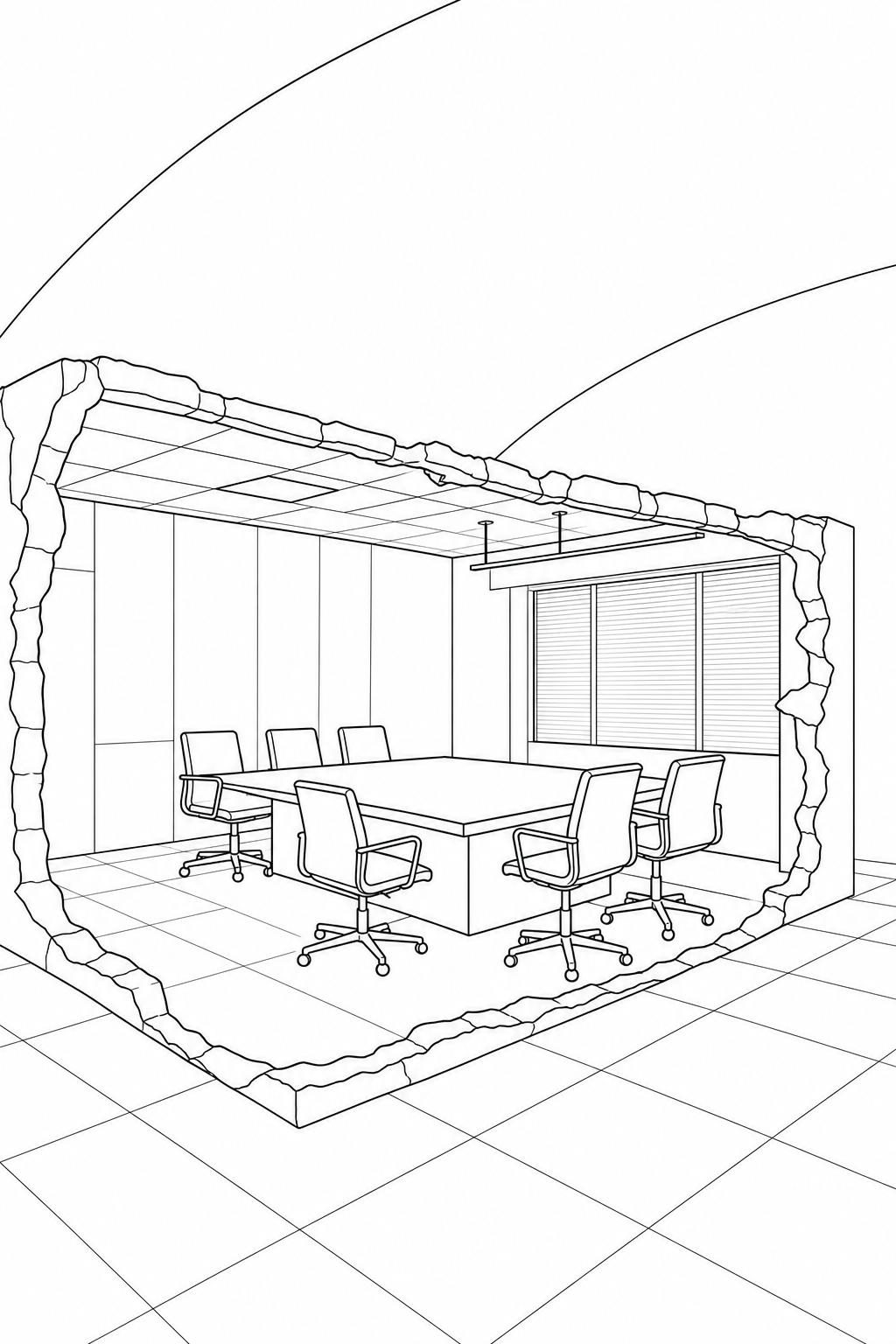
Locking the full composition.
The outline stage clarified the room, the sci-fi floor, the title block, the planet curve and the character placement before colour and texture were added.

Building atmosphere through colour.
The warm amber office interior was contrasted against the cold purple exterior. This separates ordinary corporate life from the alien setting and gives the cover its LitRPG sci-fi identity.

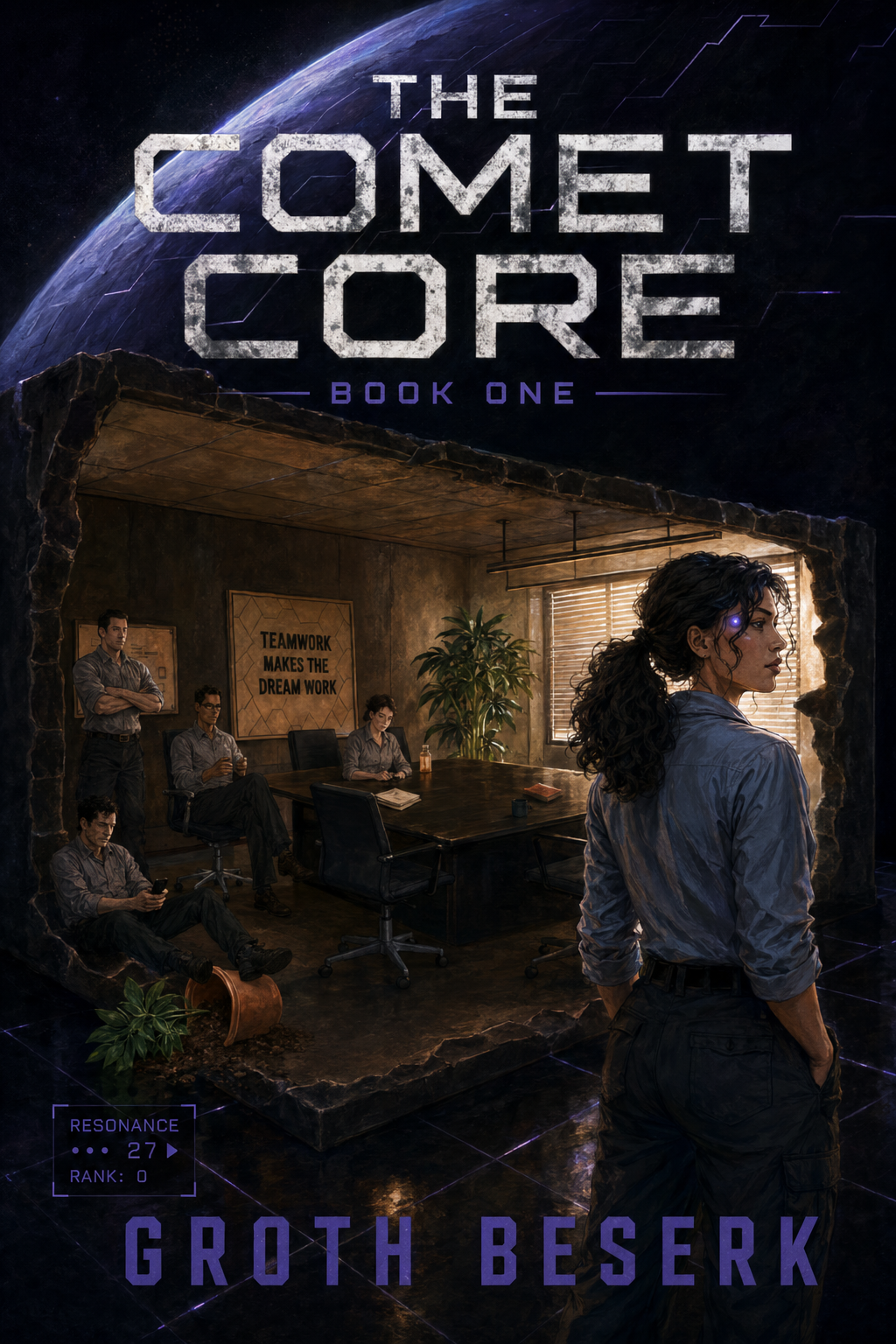
Moving into a painterly finish.
After discussing realism versus illustration, the final style moved toward a painterly, hand-drawn finish rather than strict photorealism. This made the piece feel more intentional and avoided copying the AI concept too closely.
The final cover keeps the ordinary workplace visible, because that is what makes the impossible setting feel funny, strange and immediately readable.
Refinement details

The planet/structure background was developed to retain scale without pulling attention away from Avia and the office scene.

The conference room was made deeper and more open, with a larger table, clearer chairs, a plant and a stronger corporate-office feel.

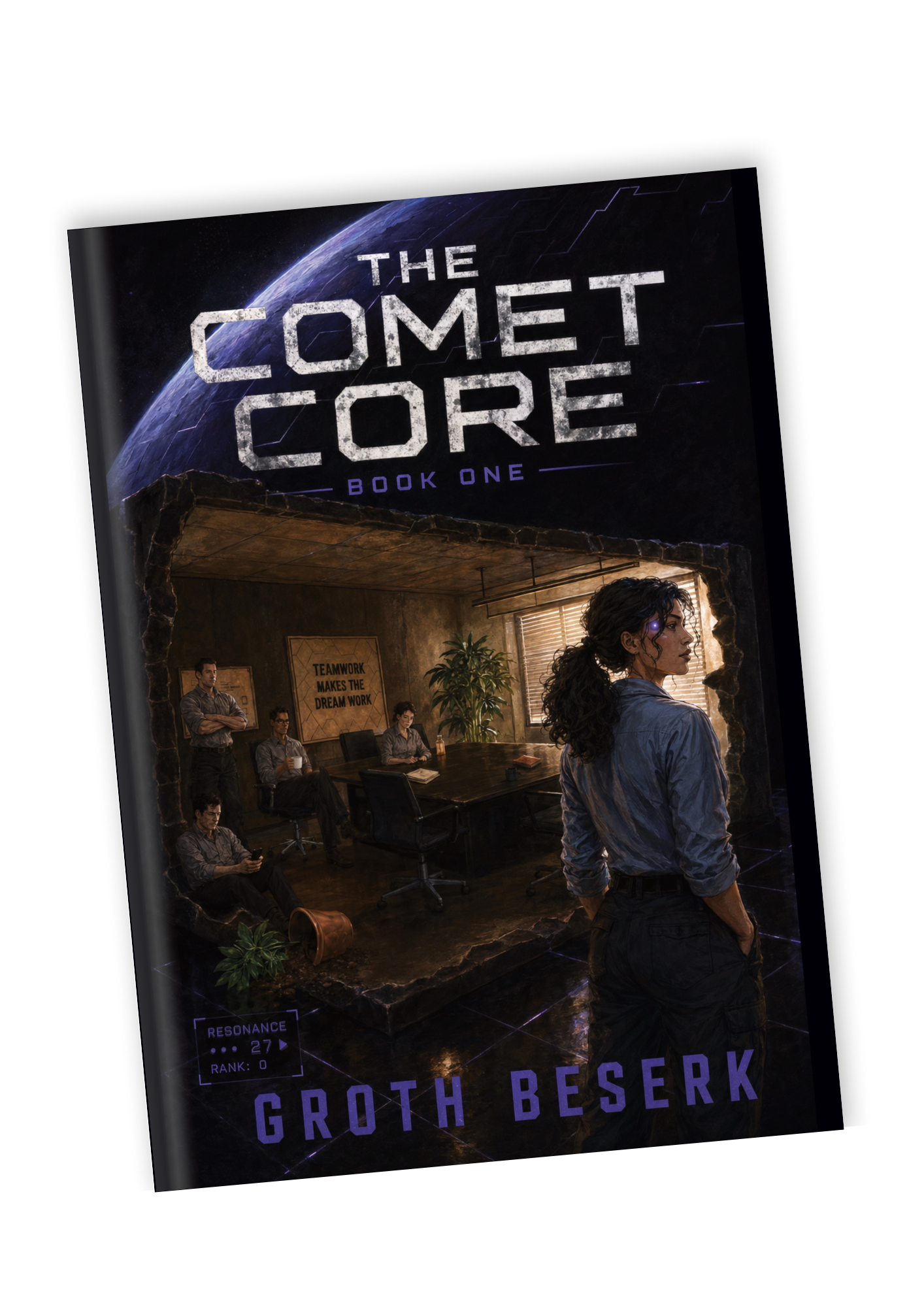
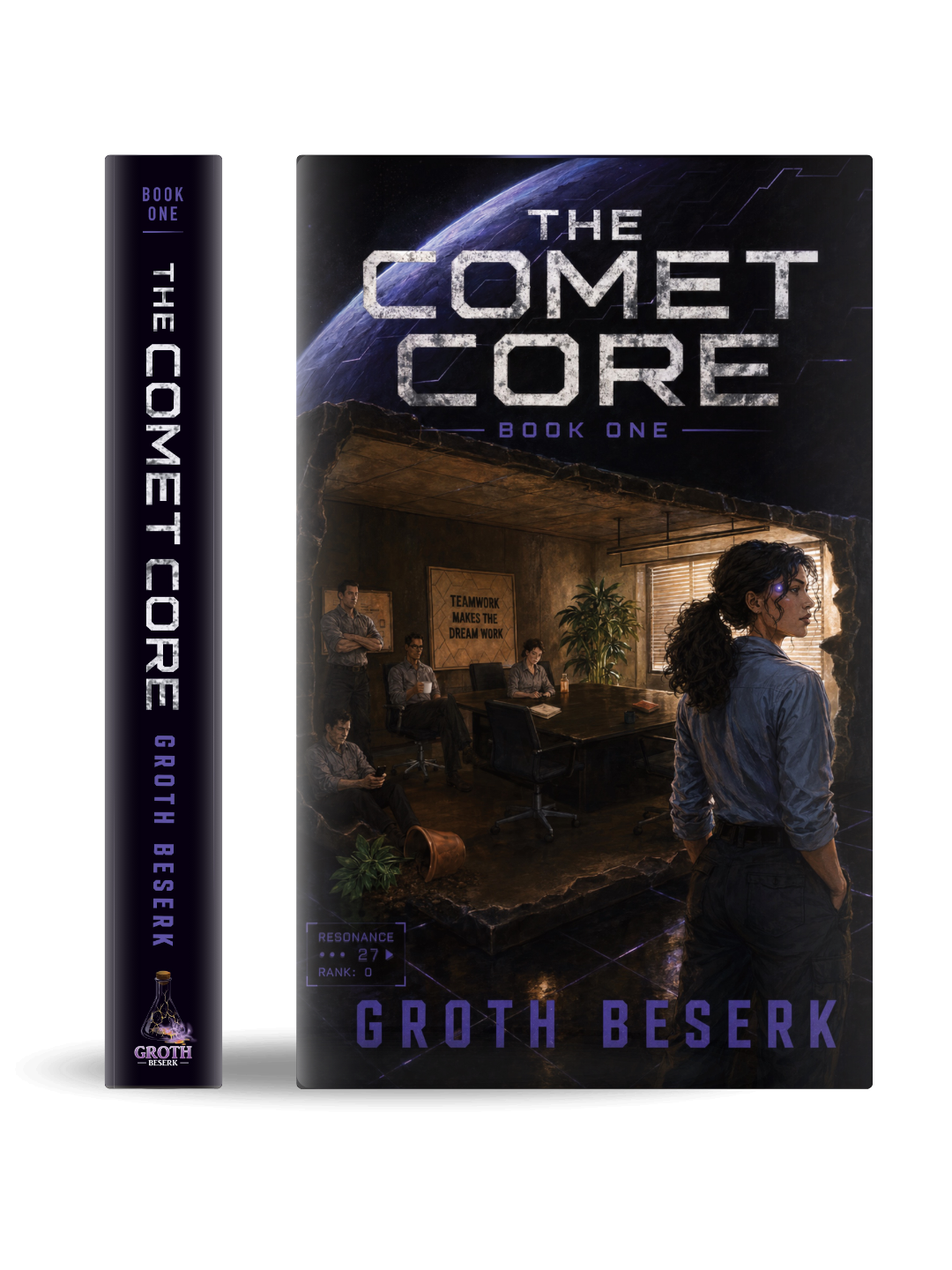
The front cover balances Avia, the team, the torn-out room and the comet-core structure within one readable image.

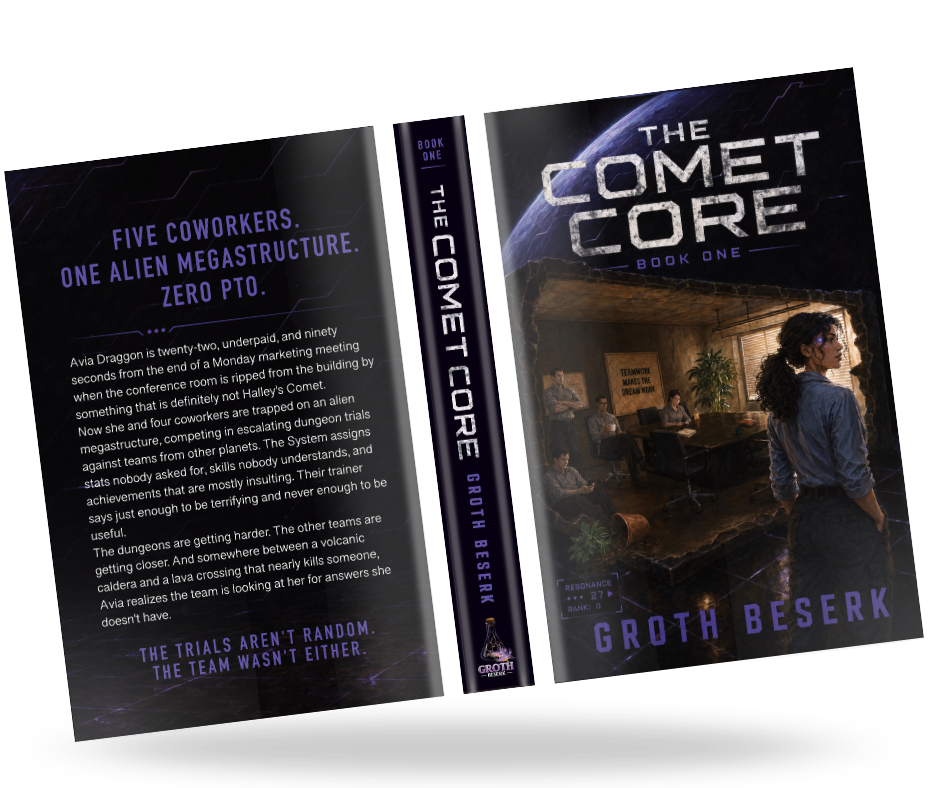
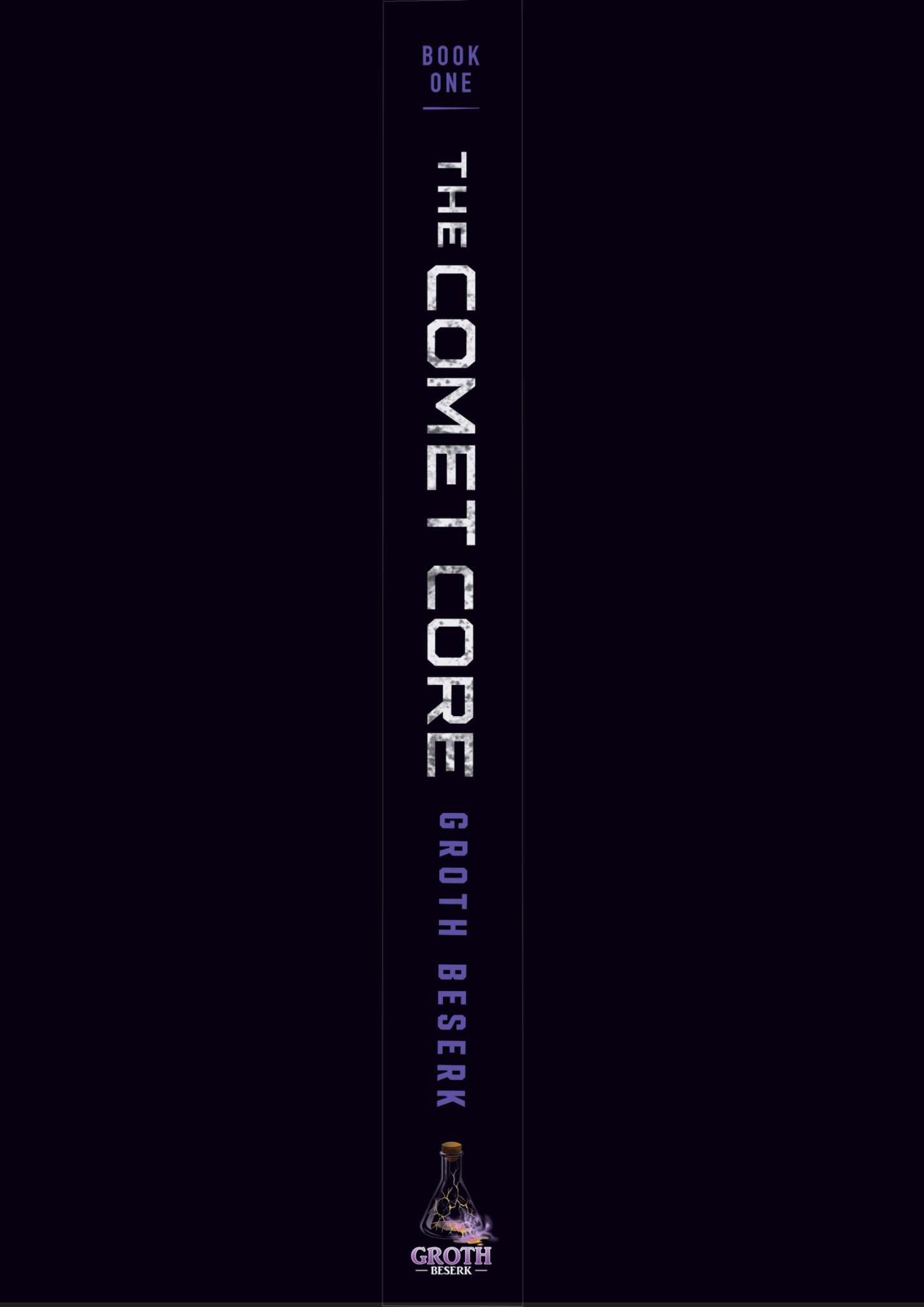
The client’s logo was considered for the spine, with a simplified treatment recommended so it would reproduce more clearly at small size.

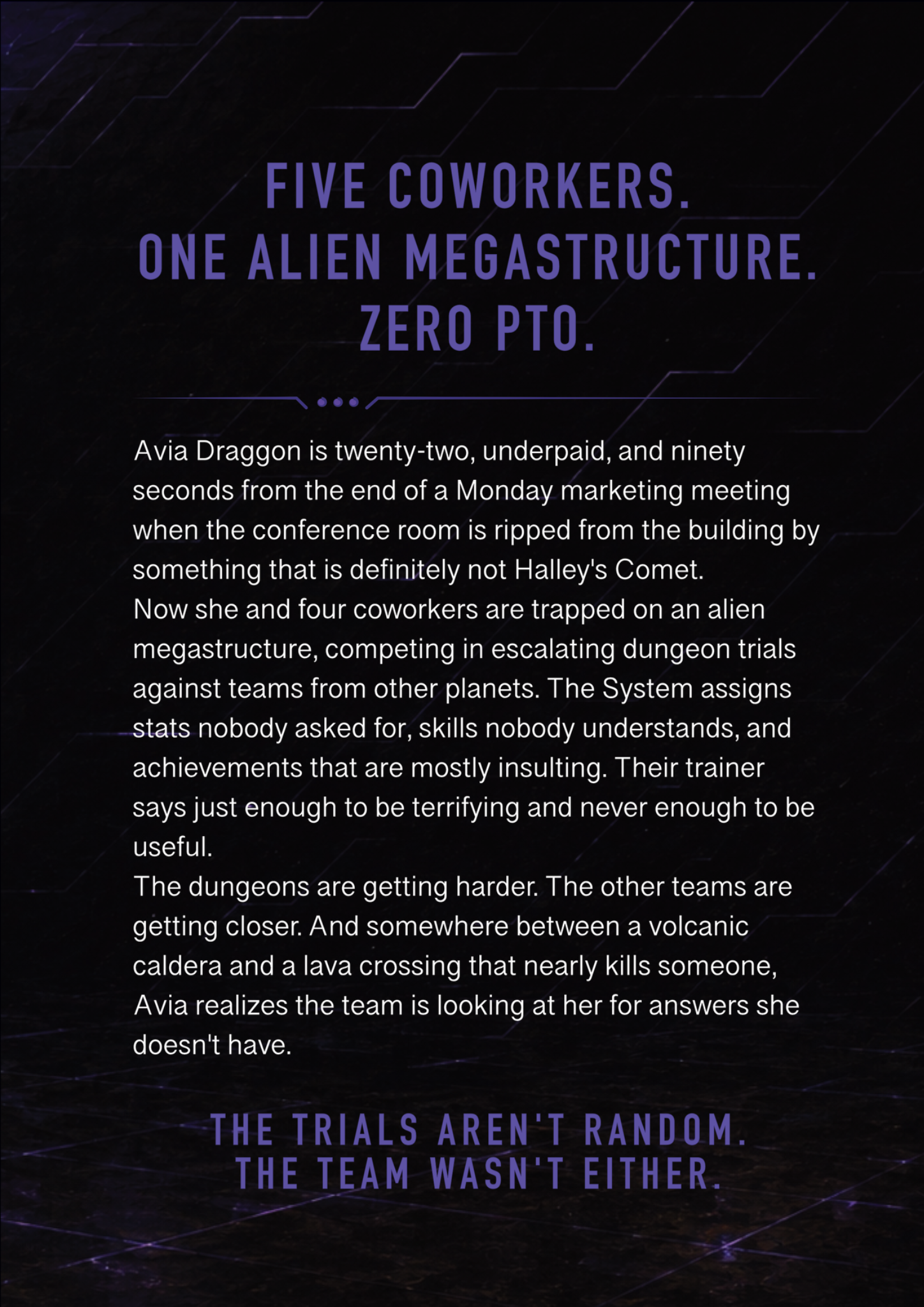
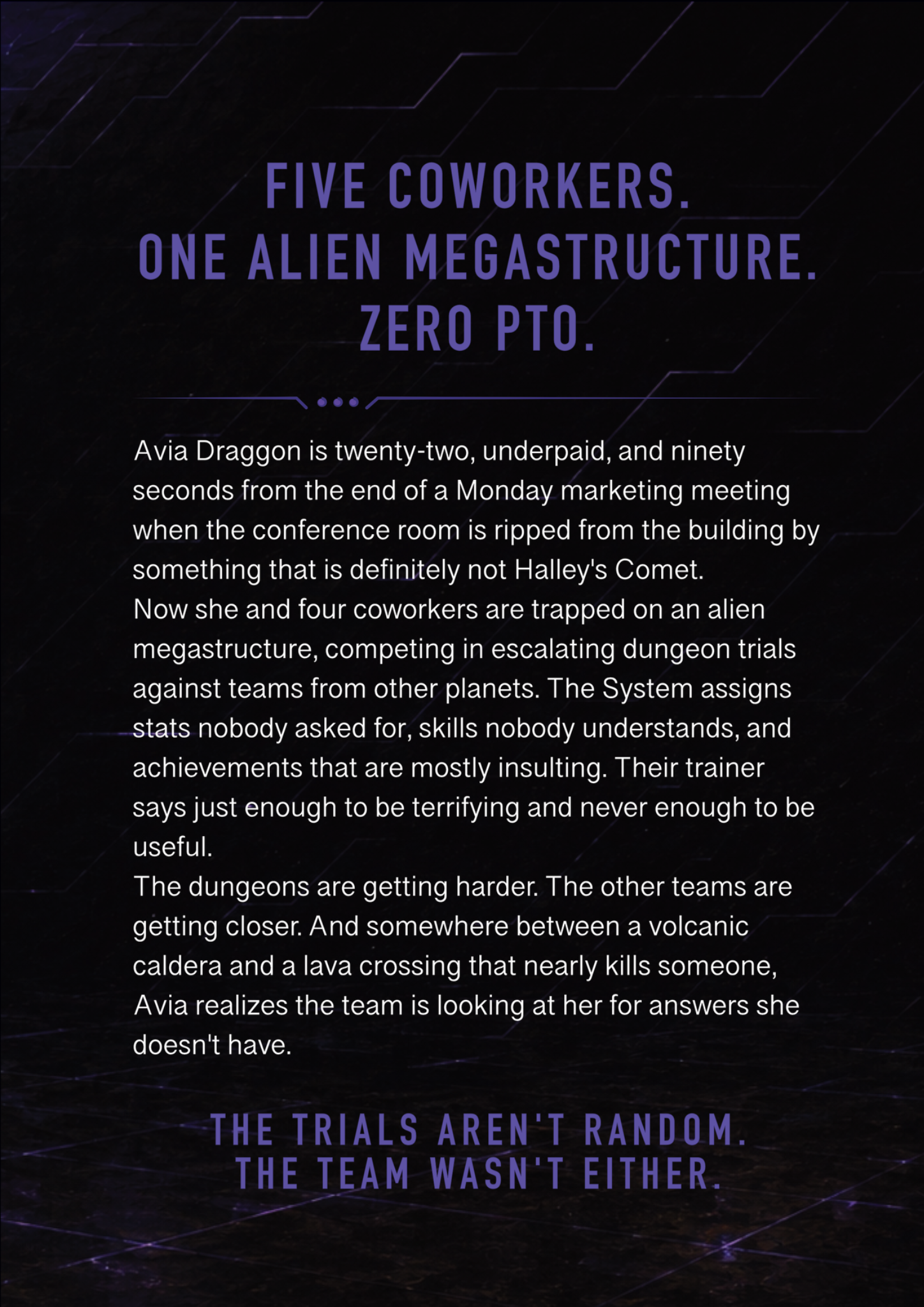
The back cover carries the same dark sci-fi texture and purple system-style typography while giving the synopsis enough breathing room.
Design decisions
The most commercial route was the one with a clear human anchor. Avia creates an immediate focal point, the glowing disc on her temple hints at the system/LitRPG element, and the team in the room preserves the ensemble premise.
The final artwork uses the contrast between warm interior light and cold sci-fi purple to communicate the book’s premise quickly: a normal workplace has been pulled into something huge, alien and dangerous. The title remains large and bold so the cover still works at Kindle thumbnail size.
Final presentation
The finished system includes the Kindle front cover proportions, a back cover with the author’s synopsis and hook, a spine using the same typographic system and a full paperback mockup showing how the design works as a physical object.